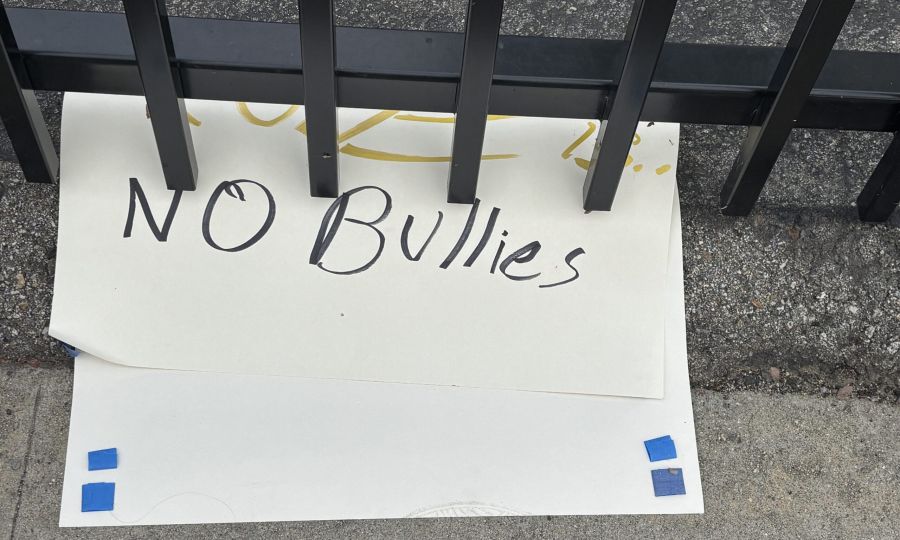
Nonprofit Fundraising, Bullying, and Psychological Safety
Toxic volunteers, and sometimes leadership, affect how we feel about our work and our place at our nonprofit.
This is a different type of post for me. I typically focus on offering a fundraising tip to others in nonprofit fundraising (sometimes recruiting). Due to recent conversations with heads of fundraising and CEOs and EDs, I decided this was the time to write about this topic.
Before I begin, this post is a compilation of experiences I and others have had. So even though I may use “I”, I am sharing about combined experiences. The paragraphs in quotes share experiences from others.
I’m going to get right into it.
“I was in a meeting with my CEO and a board member. The board member wanted to change my mind about canceling a fundraising event that took too much staff time for a small amount of funds. After a few minutes of realizing I wasn’t going to change my mind, the board member screamed at me. I was stunned. And no support from the CEO.”
Have any of you experienced this? I was shocked while listening to this story being told. But not surprised. I’ve heard of nonprofit board members and awful behavior, behavior that is often accepted by nonprofit leadership and other board members.
It is unacceptable for anyone to scream or yell at you. Full stop.
I heard this same type of story again, recently, and the head of fundraising started to explain why they thought it was understandable. I listened, and when they were finished, I let them know that it is not acceptable, and why I think that.
Yelling at someone is bullying. No, that word is not overused. Bullying happens frequently in nonprofits, and typically it comes from volunteers like board members. There is an occasion when nonprofit leadership bullies staff, and I hope that is less than from the board. Maybe not. I’m sure people will share stories with me once they read this, and I may hear differently.
Another head of fundraising shared about their CEO meeting, separately with members of the fundraising team, staff they supervised, and the CEO shared alternate plans and opinions different from what the head of fundraising wanted to do. The CEO never spoke to the head of fundraising, and this became common as time went on. Soon, the CEO was communicating directly with other staff members about fundraising work and practices, using email that included the head of fundraising, but with no separation of leadership and staff.
This is toxic behavior. This is why, when recruiting for fundraising teams, I ensure we make the right hire for head of fundraising. That way, the new person can jump in, and the CEO can allow them to do what they were hired to do without getting in the way. Leadership taking over for a head of fundraising with no communication with them is a no-go.
I have seen bullying in many forms at nonprofits. Speaking with dozens of heads of fundraising and nonprofit leadership, I know it can exist regardless of the size or mission of the nonprofit and regardless of the amount of time a person has been on the team. Unfortunately, much of the bullying starts as microaggressions, and the nonprofit staff member dismisses them as a one-off. Equally unfortunate is the fact that these microaggressions can be just the beginning of a toxic relationship that includes bullying.
As I write this, I need to take a deep breath. I hope that most reading this cannot relate to what I’m writing. Yet I know for others this will strike a chord. I’m sorry. I have been there too. It affects so many parts of who we are, not only as fundraisers but as human beings.
I don’t want to dwell on examples of bullying and toxicity. I hope that the couple of examples I have shared make the point. There are dozens of other examples. If someone on your team, staff, or board is treating you in a way that feels off, disrespectful, or like a microaggression, it has a good chance of being just that.
It’s also not lost on me the dire situation our nonprofit world is in regarding fundraising staff. Looking at data from philanthropic organizations, bloggers, and nonprofit professionals, it looks like, on average, a fundraising professional will stay at an organization for 14 -18 months. The last thing we need to do now is to excuse awful behavior that affects our teams.
I have had relationships with people who supervised me or were on my board that I could have honest conversations with. Ones that I felt safe having. I could say something like “The conversation we had earlier was off/disrespectful/unkind/fill in the blank, and I didn’t like it.” I particularly remember when my supervisor came into a meeting I was having with a staff member and scolded my staff member in front of me. After I finished, I went and spoke with the supervisor and told them how I felt about the conversation. They apologized to both of us.
I wish this happened all of the time. In conversations with others, many feel they have no power, that even a conversation like I shared did not feel possible. Many enter into one of two camps: forgetting about it and moving forward, or starting to create an exit plan. I don’t like either of these. I want (and I know it’s possible) a world where every nonprofit professional is treated with dignity and respect, and if offered what they need to be successful. In addition, this same world includes all of us treating others with dignity and respect. Bullying, microaggressions, and toxicity have no place in this world.
I have a few thoughts based on my experience on what we can do when in these situations.
First and foremost, we commit to ourselves that we will not be part of the problem. We will not bully or be part of creating a toxic work environment. If we are in executive or board leadership, we have conversations about this and create policies in our handbooks that speak to bullying and how we, as an organization, do not accept it and how we handle it if we see it.
Next, I like to look in the mirror. Often. It’s become a habit. This means I am looking at myself to see if I’m part of the solution or part of the problem. I must admit that I have made mistakes during my years of nonprofit leadership and have learned that constant self-reflection keeps those types of mistakes at bay. Also, consistent conversations with others, like those in my professional inner circle, are helpful.
This next one is a bit more difficult. Speak truth to power. In the cases of bullying, toxic work environments, and the use of microaggressions, these acts are perpetuated by people who want to exert power. In my past, I have asked to speak with whoever did or said something that negatively affected me, one-on-one. In most cases, well, all except one, these conversations were wonderful. We were both able to move on and do our jobs, with me feeling safe. I know this isn’t always the case, and I highly recommend thinking the conversation through before speaking truth to power.
The biggest thing I think we all can do, that is, heads of fundraising, CEOs and Executive Directors, and board members, is to live and work by example. Show leadership, support, kindness, all while creating an environment where everyone feels emotionally safe, filled with what they need to succeed with their work. The world these days is a scary place, scarier for many of those who our nonprofits serve, and having a team on their side that is fully available and not having to deal with everything I have written about here is better for everyone.
—
Take a risk. Be of service. Support your friends and colleagues. Be kind.
Currently reading:





This is a powerful and essential piece of writing for the nonprofit sector.
The courage and clarity with which you address the issue of bullying—and link it directly to the critical need for psychological safety in leading the mission—is deeply impactful.
The care, wisdom, and sheer empowerment infused in your analysis will serve as a tremendously bright light for countless professionals. I truly believe that the prose and insights you’ve shared here will help individuals process, heal, and ultimately begin to free the sector from the burden of unhealthy professional dynamics.
Thank you for your leadership, Altrui, in tackling this vital and often-ignored subject. I look forward to learning the impact this work has on our peers and the larger sector.